
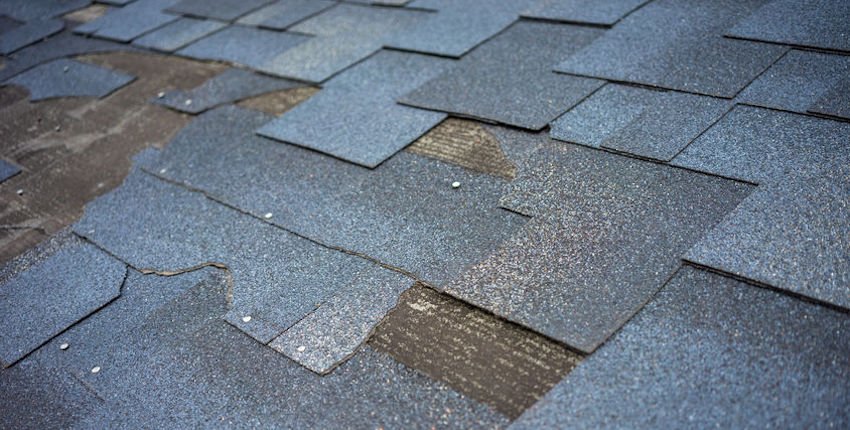
A visual check for missing roof shingles does not have to mean climbing onto the roof. Walking on shingles can break or loosen them further, and the fall risk on a steep residential pitch is significant. Keep both feet on the ground and use the methods below. When you need a closer look, a professional roofer can get detailed photographic coverage with a drone roof inspection.
What Causes Missing Roof Shingles in North Georgia
Forsyth County and the surrounding foothills see weather that is harder on roofs than most homeowners realize. Here are the most common reasons shingles go missing in this area:
- Wind and storms. North Georgia sits in a corridor that sees strong summer thunderstorms and periodic tropical weather remnants tracking inland from the Gulf and Atlantic. The Insurance Institute for Business and Home Safety documents how even moderate wind speeds can lift shingles that are nearing the end of their sealed life. The sealing strip on the bottom edge of each shingle bonds to the course below, but that bond weakens over time and fails under sustained wind uplift.
- Age and granule loss. Asphalt shingles have a service life of roughly 20 to 30 years, but Georgia's heat cycles accelerate granule wear. As granules wash away, the asphalt beneath becomes brittle, cracks, and breaks free during the next windstorm.
- Nail pops. The decking beneath your shingles expands and contracts with temperature changes year after year. That movement eventually pushes roofing nails upward through the shingle surface, leaving exposed fastener heads that break the shingle's hold and let it lift free.
- Overhanging tree limbs. Oaks, poplars, and pines that grow close to the roofline scrape off granules, trap moisture against the surface, and can knock shingles loose during storms. Limbs that touch the roof should be trimmed back to at least six feet of clearance.
- Poor installation. Nails driven too high on the shingle, too few fasteners per shingle, or shingles seated incorrectly are installation errors that often go unnoticed for years before showing up as shingles lost to the first serious storm.
How Do I Know If I Have Missing Roof Shingles?
Shingles are the rectangular, asphalt-coated pieces that cover the wooden decking of your home. They deflect sun and debris, shed rain, and form your first barrier against wind, pests, and water. When one or more go missing, everything beneath is exposed.
With a pair of binoculars, walk the perimeter of the house and scan the roof from multiple angles. Work from left to right, from the ridge down to the eaves. Look for flat, uniform rows. Missing shingles leave visible gaps or dark patches where the bare decking shows through. Shingles that are present but curled at the edges or buckled in the middle are the next ones likely to go.
It will be obvious when a shingle is missing entirely. Just as a missing puzzle piece leaves a gap in a jigsaw, a missing asphalt shingle leaves a hole in your roof's cover. At that point, you need a repair before the next rain.
What Are More Signs of Missing Roof Shingles?
You may notice clues from the ground or from inside the house before you ever pick up binoculars:
- Granules in the gutters. A small amount of granules during a new installation is normal. If you are cleaning the gutters on an older roof and finding a steady stream of dark granules, the shingles are shedding their protective coating and are close to the end of their life.
- Ceiling stains or water spots. A brown or yellow ring on a ceiling is a classic sign of a slow roof leak. Water does not always drip straight down from the entry point, so the stain may appear some distance from the actual damage, but it confirms water has found a way in.
- Daylight in the attic. On a dry, bright day, go into the attic with the lights off and let your eyes adjust. Any pinpoint of natural light coming through the decking means there is a gap. It is not always at the location of a missing shingle, but it confirms a breach worth investigating.
- Unexplained increase in energy bills. Missing shingles allow conditioned air to escape and outside air to enter through the decking. If your cooling or heating costs have risen without an obvious cause, the roof is worth inspecting.
What to Do Right Away
Speed matters with missing roof shingles. Even brief summer rainstorms push water through gaps quickly. Here is what to do as soon as you discover the problem:
- Photograph everything before repairs begin. Date-stamped photos from multiple angles give your insurance adjuster evidence of the pre-repair condition. If you eventually file a storm damage claim, those photos are some of the most useful documentation you can provide. See our guide to handling storm damage on your roof for the full insurance documentation process.
- Apply a tarp if safe and rain is coming. A heavy-duty polyethylene tarp weighted at the edges can slow water entry until a roofer arrives. Do not attempt to secure a tarp on a steep, wet, or slippery roof. The goal is temporary protection, not creating a second safety problem.
- Call a roofer promptly. Roofing companies in North Georgia book out quickly after major storms. Getting on the schedule as soon as possible means repairs happen before the next rain event rather than after it. Explain that you have missing shingles and exposed decking so the company understands the urgency.
The Risks of Waiting
Many homeowners put off dealing with missing shingles because the problem feels manageable until it rains. The professionals at Hopewell see this regularly, and the cost difference between a quick repair and a delayed one is striking. When shingles are missing:
- Rainwater seeps into the layers beneath and soaks the insulation. Wet insulation loses its insulating value and can hold moisture for weeks, eventually creating conditions for mold growth in the attic.
- Water that reaches the decking causes the wood to swell and soften. If the decking stays wet through several rain cycles, it can require replacement on top of the shingle repair, adding significant cost to the job.
- Even in dry stretches, heat and UV exposure degrade the underlayment and the edges of adjacent shingles. A one-shingle repair left too long can grow into a three- or four-shingle repair by the time a roofer arrives.
- The longer your home goes without a complete weather barrier, the greater the risk of hidden water damage in walls, ceiling joists, and structural framing.
A repair that costs a few hundred dollars today can turn into a repair requiring partial decking replacement and new underlayment if it is ignored for a season.
Patching a Roof vs. Replacement
Replacing one or a few missing roof shingles is one of the most cost-effective ways to maintain the integrity of your roof. A skilled roofer slides the new shingle into the correct position, fastens it at the proper nailing location, and seals the edges. Done correctly, a shingle repair lasts as long as the surrounding shingles and restores full weather protection to that section of the roof.
A full roof replacement becomes the right conversation when multiple sections are showing granule loss, curling, or repeated shingle loss after each storm. If the existing shingles are more than 20 years old, if the decking has soft spots in several locations, or if repairs are being made every year to keep up with ongoing failure, an honest roofing assessment may point toward replacement as the more economical long-term choice. A qualified roofing company will give you a straight answer on where your roof stands.
How Professional Roofers Replace Missing Shingles
A professional shingle replacement is different from a temporary patch in ways that matter for the long-term health of the repair:
- Nails are driven at the correct depth and at the correct location on the nailing strip. Nails placed too high reduce the shingle's wind uplift resistance and can cause the same failure all over again.
- The roofer inspects the decking beneath the missing shingle before the new one goes on. Soft or rotted wood beneath the gap needs to be addressed or the repair will not hold.
- Adjacent shingles and nearby flashing are checked while the crew is already on the roof. Catching a loose flashing piece at the chimney or a cracked valley shingle during the same visit avoids a second service call.
- Reputable companies carry general liability and workers' compensation insurance. If anything goes wrong during the repair, the contractor's coverage handles it rather than yours.
Replace missing roof shingles quickly and correctly with help from the team at Hopewell Roofing & Restoration. Contact us at the first sign of a problem and we will get out to you fast, assess the full picture, and get your roof protected before the next storm comes through.
This article is by Andy Morrison. Hopewell Roofing & Restoration is a GAF Master Elite roofing contractor serving Cumming, GA, and the surrounding areas. With over 16 years of experience, our team delivers expert roofing services you can trust.
Get a Free Estimate